A 4-Hour Masterclass for Screen Actors
Walk onto set ready.
Book the next role.
The practical, on-set knowledge that directors and crew members wish actors knew. Cheating to camera, lens behaviour, marks, continuity, crew language and much more. Learn these technical skills, so you can walk onto set with confidence.
- Cheating to camera
- Prop Handling
- Moving For Camera
- Sound
- Set Etiquette
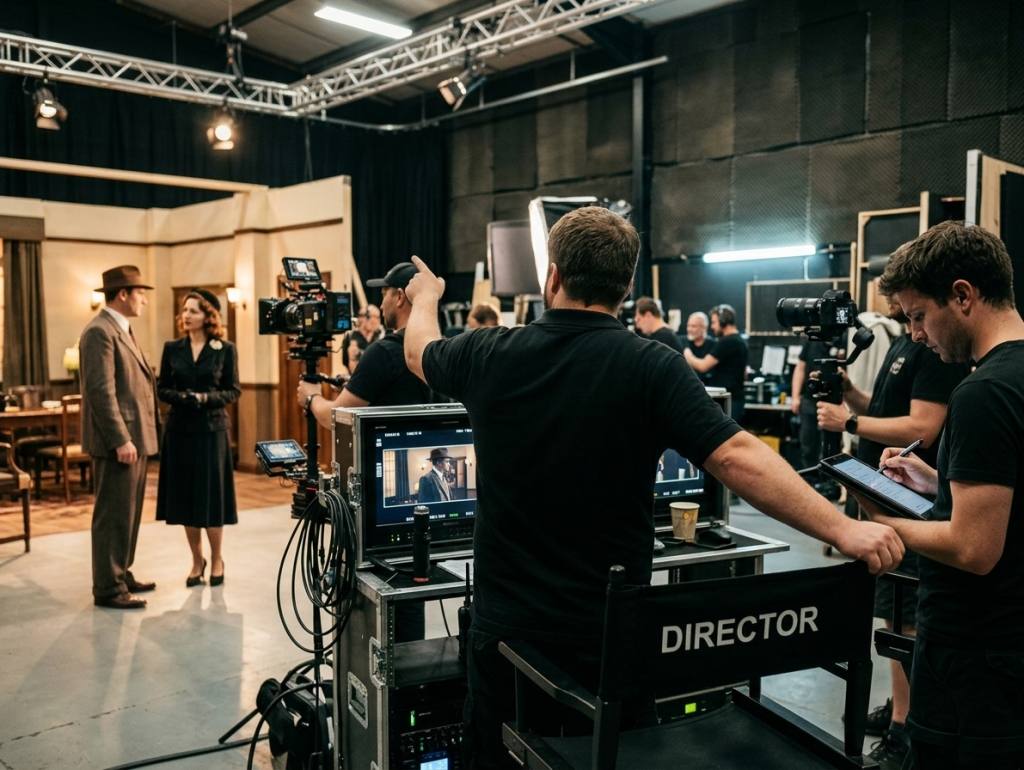
Get Set Ready
You have the talent. But do you have the “Set-Logic”?
Most actors learn the hard way, over years of confusion, mistakes, and silent corrections on set. You’ll learn it in 4 hours.
Understand the lingo, the lines, and the lens physics before you set foot on a professional set.
This isn’t just about sounding informed. It’s about walking onto set with quiet confidence, knowing who to talk to, when to move, when to stay silent, and how your performance fits inside a fast-moving technical environment.
When you understand how a set actually works, everything changes. You stop guessing. You stop hesitating. You stop unintentionally slowing things down. Instead, you become the kind of actor who feels easy to work with; the kind directors notice for the right reasons and want back again.
Because professionalism on set isn’t just about performance. It’s about awareness. It’s knowing how your craft fits into camera, sound, lighting, timing, and crew workflow without ever needing to be told twice. Most actors focus only on the emotional side of acting. The ones who get called back understand both: the performance and the system it lives inside.Meet Your Instructor.
I first stepped onto a professional film set 30 years ago as a child actor.
Back then, I was simply excited to be part of it all. The cameras, the crew, the energy of a working set. I loved acting, but fairly early on I realised something important: my real curiosity was not only about being in front of the camera. It was about understanding everything happening behind it.
Peter Palmer, Director & Founder
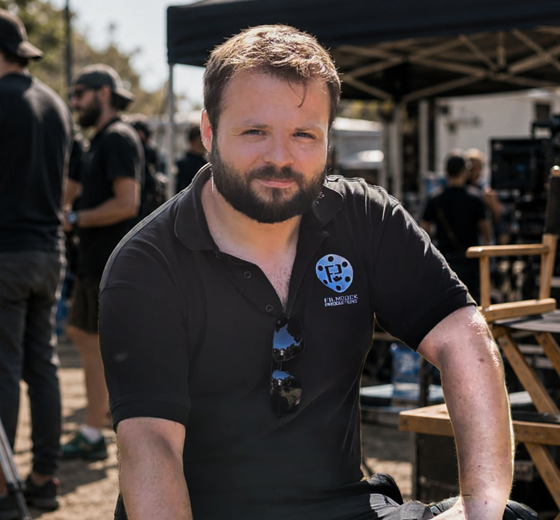
That curiosity became my career.
At 14, I began studying filmmaking in a more structured way at high school, where I had access to a fully equipped video studio. That environment gave me something invaluable very early on: hands-on experience with the technical side of visual storytelling. Around the same time, I directed my first short film. It went on to screen at Hungarian youth film festivals and received awards. From there, I never stopped working in film.
In 2013, I moved to London and began working professionally across the industry as a cinematographer, editor, VFX artist, and later as a director. Over time, I built a career that allowed me to understand every layer of production, not just a single role within it.
In 2019, I founded my own production company specialising in actors’ showreels and short films. Since then, I have worked directly with thousands of actors, from emerging talent to graduates of some of the most prestigious drama schools in the world.
And I kept noticing the same thing.
Many actors had strong emotional training, but very few had been taught the technical language of screen acting.
I found myself constantly teaching the same practical skills: how to cheat for camera, how to move naturally within frame, how different lenses affect performance, where to place eyelines, how to hit marks without looking down, how to use props believably on camera, and how to avoid the common amateur habits that instantly reveal inexperience on screen.
Not because these actors lacked talent, but because nobody had properly explained how cameras actually see performance.
This masterclass was created to bridge that gap.
The course focuses on the practical realities of screen acting. The things actors are often expected to somehow “just know” once they arrive on a professional set.
Because screen acting is not only emotional. It is also mechanical, spatial, visual, rhythmic, and deeply connected to the language of filmmaking itself.
I have experienced both sides of that process.
I know what it feels like to be the actor trying to stay emotionally present while navigating marks, lenses, crew, continuity, and technical adjustments. And as a filmmaker, I also know what directors and cinematographers actually see through the monitor, what reads beautifully on camera, what breaks the illusion, what slows productions down, and what immediately makes certain actors stand out as professionals.
This masterclass exists to give actors that missing layer of understanding.
It is not abstract theory. It is practical, real-world knowledge drawn from decades of experience on professional sets. The kind of understanding that turns training into employability, and talent into trust on set.
Peter Palmer, Director & Founder
- 10
- 1000
- 30
A 4-Hour Masterclass for Screen Actors
Inside The Masterclass.
From Working Actors
They Stopped Acting.
They Started Booking.
I did a year of acting training at drama school and learnt more about acting for screen and working with a camera from a few hours from this masterclass, than I did in the year at drama school. Being able to see every concept on screen and how it looks in application made it so much easier to understand and so much more memorable. I will genuinely take the tips and learnings with me for the rest of my career
I think the masterclass is incredible. It's incredibly informative, well structured, clear and doesn't drag on. The detail in information is concise and practical. Small details like, don't talk on your first step (during the walk and talk shots) but instead take about two steps and then start the dialogue so it doesn't look like you started walking as the camera started rolling. On first hearing that it seems like a small detail, but it makes such a huge impact on camera. The technical information about lens and adapting performances according to what lens is being used; the importance of staying alive in your character after delivering your dialogue. It's all need to know information that will help any actor give a better, more grounded, and truthful performance on screen. Overall, I think this masterclass is phenomenal, as you break everything down well and give harsh truths about screen acting that some drama schools shy away from, but all actors need to be aware of. This masterclass helps actors be better prepared for screen work as a lot of this information, some directors will expect actors to know.
I went into this course thinking I had a pretty good understanding of working with a camera. I was surprised by how much I still picked up. As actors, we spend so much time concentrating on performance that we don’t always understand what is happening on the other side of the lens, or how we can actually help the camera tell the story. Pete explains things from a DOP’s point of view but in a way that makes complete sense to an actor. There were things I’d been doing instinctively for years without really knowing why, and other things I simply hadn’t thought about. Understanding different shot sizes, how and why you might cheat a position, working with props, hitting marks and even how your positioning can help create depth in a shot has made me much more aware on set. Even with experience, there was plenty here that was new to me. I came away feeling I understood the camera much better — and that makes me a better screen actor.
Understanding both the technical demands of performing for the camera and the professional expectations of working on set are essential tools for any actor who wants to build a sustainable career. What I particularly appreciated about the masterclass was how clearly it demonstrated that filmmaking is a collaborative art form. Actors are one part of a much larger creative process, and understanding, respecting and appreciating the work of the entire crew is fundamental to fostering a positive and respectful working environment on set. Peter's masterclass provides actors with not only valuable technical knowledge, but also a much deeper understanding of what it means to be a professional actor on a film set. I would highly recommend it to anyone serious about working in film and television.
I've done some screen acting before, but this covered things I hadn't even thought of. It's a really well-considered masterclass, clearly developed from experience, not just thoughts and ideas.
I like how it considers multiple aspects that change screen acting, like different lenses, the other actor, editing, the position of the lights, or the composition of the shot. The visual examples were so helpful, as I didn't know about a lot of this before
So many online courses and masterclasses feel disconnected, but I like how personal this felt. It's not just some guy talking at the camera. Rather than just receiving information with no guidance, it felt like I was being helped step by step. It was specific and really helpful
As someone who is quite new to acting on camera, I was worried this might all get very technical very quickly, but Pete makes everything incredibly easy to understand. I finished the course feeling like I’d be much more confident walking onto a set. There’s loads to learn when you’re starting out, but this made the technical side of film acting feel straightforward and achievable.
My training and experience has always made me feel confident in the craft of acting, but acting for camera is something I wanted to understand on a much deeper level. What I loved about Pete’s course is that it isn’t trying to teach you how to act. It teaches you how to take your performance and make it work for the camera. I knew how many small technical choices an actor makes during a shoot. Where you stand, where you look, how you handle a prop or adjust your performance depending on the shot, but Pete also explains the reasons behind these things, which I found really useful. Rather than just being told to hit a mark or cheat towards camera, you begin to understand what the DOP is trying to achieve and how you can work with them. I feel much more camera-aware after doing the course. I can concentrate on my performance while also understanding how that performance is being captured, which is a skill I wish I’d developed much earlier.
The whole bit on props and making them more natural, not perfect, was really good. I always overthink that, and it helped me know what actually works, rather than guessing or hoping.
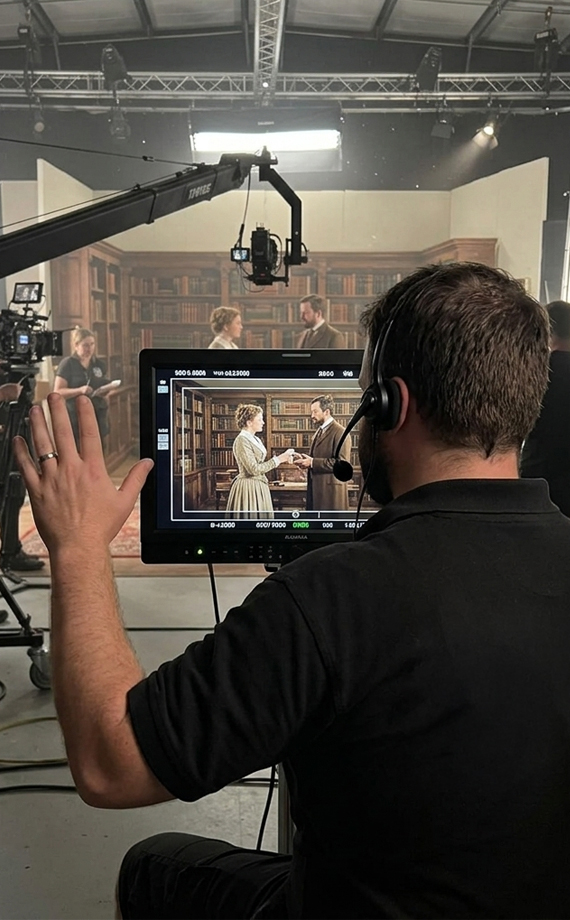
Stop Guessing On Set.
Start Booking The Next One.
One payment. Lifetime access. Every tool, term and technique drama school never taught you, ready when the next call sheet lands.
- 4-Hour Masterclass — full on-set craft, self-paced
- Supporting PDF materials — Set Etiquette, Crew Positions, Lingo
- Lifetime Access — yours, on any device
- Continuous Updates — included, forever
- Practical Technical Training — marks, eyelines, frame, movemnt
- Set-Day Confidence — walk on knowing the language
Why now: casting calendars don’t wait. Every week without these tools is a self-tape that sounds like guesswork instead of craft.
- 7-Day Money-Back Guarantee
- Secure checkout
- Instant access
- Lifetime updates